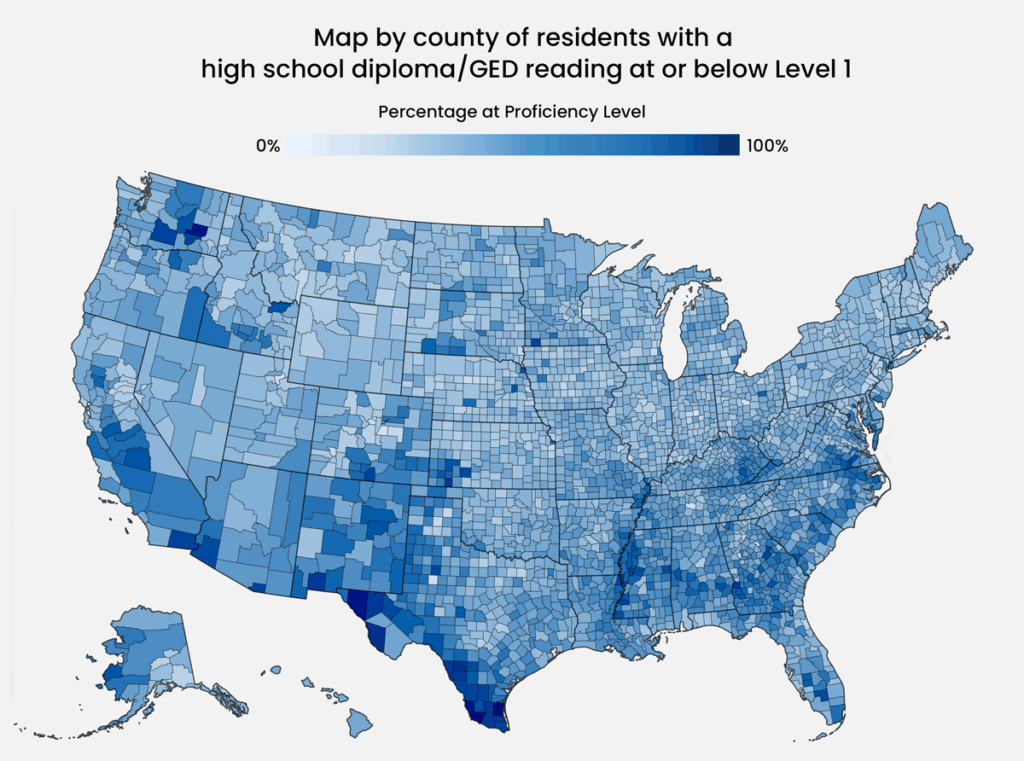
One in four young adults across the U.S. is functionally illiterate – yet more than half earned high school diplomas, according to recently released data.
The number of 16-to-24 year olds reading at the lowest literacy levels increased from 16% in 2017 to 25% in 2023, according to data released in December from the National Center for Education Statistics in partnership with the Program for International Assessment of Adult Competencies.
In 2023, a total of about five million young adults, equivalent to the population of Alabama, could understand the basic meaning of short texts but could not analyze long reading materials, according to further analysis by the American Institute of Research.
The nine percentage point increase is in line with an unprecedented decline in the literacy rate among all adults in the same six-year period.
But even more troubling is the AIR researchers’ finding that while the percentage of young adults with high school diplomas increased from 50% to 55% between 2017 and 2023, that group also saw the largest decrease in scores on tests measuring literacy skills compared to older adults with diplomas.
“We know that over 20% of (young adults) that get their high school diploma do not have the skills commensurate with that,” said Sharon Bonney, chief executive officer of the Coalition on Adult Basic Education, a national adult education nonprofit. “So, when we have this ‘Make America Skilled Again’ agenda, but people can’t read, write, speak the language or do math, they can’t get good jobs and better jobs. They can’t be skilled up.”
Education experts blame the overall increase in functional illiteracy in part on poverty and housing instability, a growing population of students with high needs and the pandemic shutdown of schools, which affected some of those in the 16 to 24 year old group. Many adult education programs were also shuttered during the pandemic.
But researchers also believe the data may point to more troubling trends among young adults: students increasingly passed through their school years without acquiring needed skills, a disconnect with curriculum — and a changing standard of what level of literacy is needed now that technology can provide information without most people having to think twice about it.
“When you talk about literacy, what are we talking about? Is it reading, writing, filling out forms? Or really understanding and critically questioning what it is we’re consuming?”