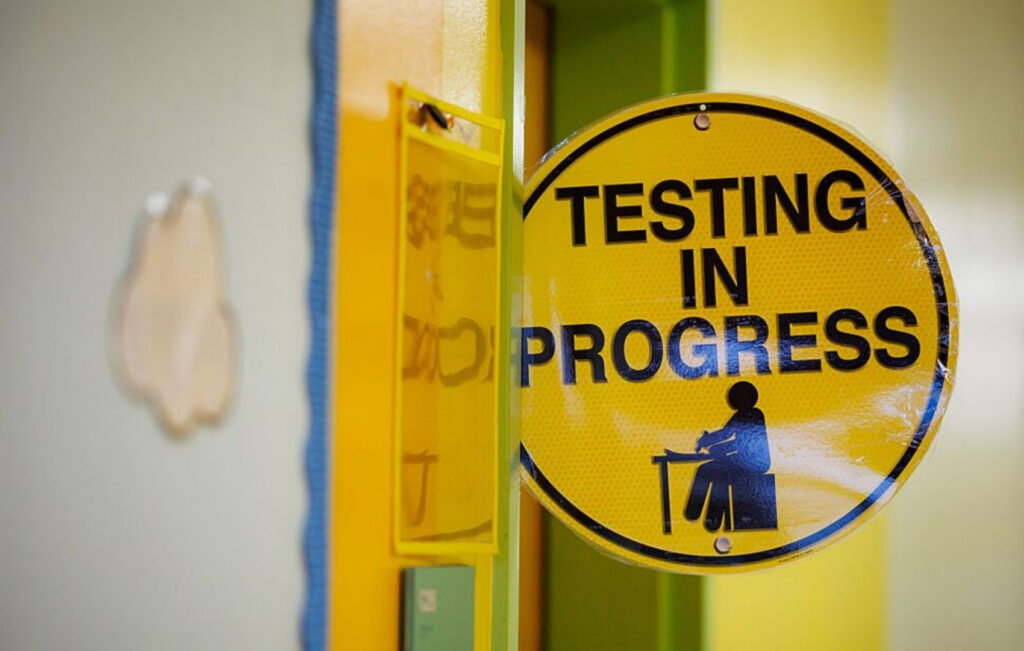
An overwhelming majority of U.S. states are seeing below-average test scores in reading and math, far beyond the COVID-19 pandemic’s disruptions, according to a new report called the Education Scorecard.
A collaboration between the Center for Education Policy Research at Harvard University, the Educational Opportunity Project at Stanford University and faculty at Dartmouth College, the report provides a national comparison of schools through 2025.
The new data covers third- through eighth-grade math and reading test scores in more than 5,000 districts across 38 states and the District of Columbia, accounting for about 68% of school districts nationwide. The data does not cover states, including New York and Illinois, that have high opt-out rates or noncomparable data.
Researchers found a “U-shaped” post-pandemic recovery, meaning that the lowest- and highest-income districts saw larger improvements than those in the middle, which lagged behind. They attribute this pattern to higher rates of federal pandemic relief funding in poor areas and more access to education resources in wealthy areas.
The data shows that the U.S. has been in what research called a “learning recession” since 2013 – when social media use became widespread among youth and test-based accountability was phased out under the No Child Left Behind Act. The researchers say “both are likely candidates” for sparking the decline in test scores.
While math scores rebounded immediately after the pandemic, reading scores continued to decline until the start of a turnaround in 2025.
The states that improved in reading from 2022 to 2025 all had something in common – they implemented a new method of literacy education called “science of reading,” which focuses on the technical and phonetic aspects of reading. The report says this reform “may be a necessary but insufficient path to improvement.”
Still, 1 in 3 school districts see students reading a full grade level lower than they were in 2015…