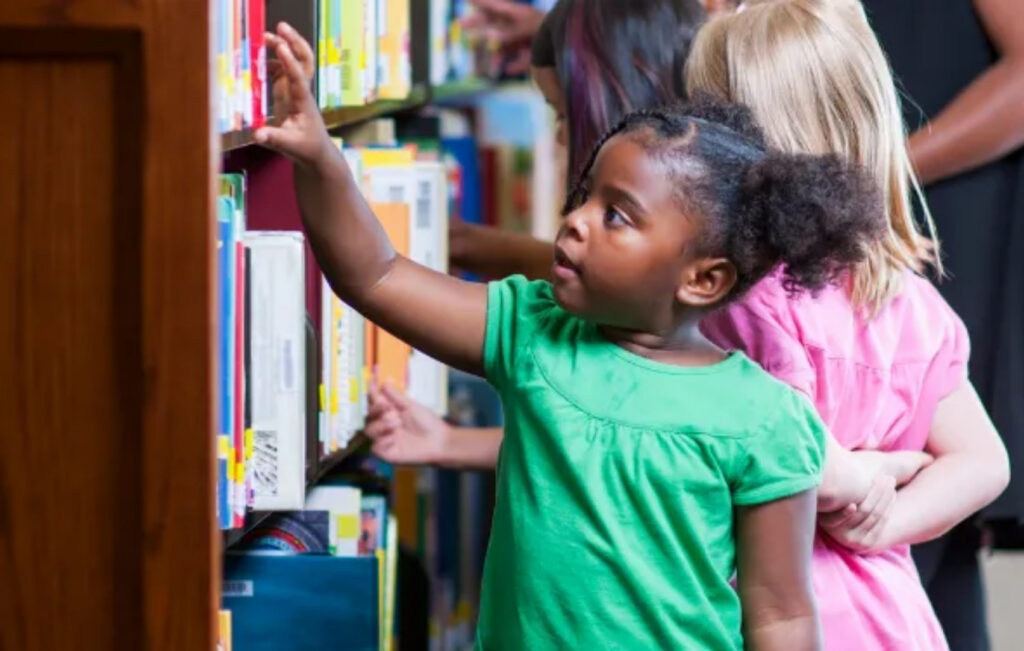
Come June, many public libraries in the U.S., UK, and Canada offer summer reading challenges to keep kids reading after school lets out. As a children’s librarian, summer is easily the best time of year in our job because enthusiastic kiddos fill the library, super jazzed to complete the challenge and receive a medal. Who doesn’t like a fun test of their abilities? Plus, school is out, so kids are happier and around way more often, giving the library space an extra buzz.
In fact, summer reading challenges give me an excuse to go all out decorating-wise. While I decorate the kids’ area year-round, I always go bigger for summer since we will have more kids around for longer hangouts. You want it to feel vibrant and exciting.
But let’s backtrack, because you may not know what I’m even writing about if you don’t have kids or work at a library. Summer reading challenges have been a staple of library services for over a century. Though specifics vary, the concept is that it’s a free annual program that engages five to twelve-year-olds in literacy. As a bonus, it’s also a wonderful way for our child patrons to develop positive relationships with their local librarians as we sign them up and, later on, dole out medals. Plus, connecting with the kids is both wonderful for them and great for us; because we visit schools to promote the program, kids will come in, recognize me, and act like I’m a book-slinging rock star. Nothing perks up the day of a children’s librarian like kiddos being happy to see you.
An American Libraries article from last year reported that 15-30 minutes of reading every day over the summer deters learning loss. According to the American Library Association, summer reading challenges began in the 1890s to encourage city kids to develop the habit of reading year-round. Farm kids were busy with farming tasks, but kids in urban areas didn’t necessarily have much else going on once school was out for the summer. Probably the goal was to keep kids from getting bored and acting out in potentially harmful ways; reading has so many more benefits than just that.
Reading is vital to children’s development and not just as an indicator of smarts. Ultimately, children who read tend to be more resilient, calmer, happier, and self-assured. As stated in a 2017 post by the Association for Library Service to Children, “children who do not participate in learning experiences over the summer year after year have an academic achievement gap that grows throughout the elementary and middle school years. This summer learning loss can add up to about two-thirds of the gap in reading achievement by ninth grade.”…